By Lisa Snyder, Lisa Snyder Properties
One of the most common questions I hear from buyers exploring Cherry Hills Village is whether they should pursue a newer construction home or consider one of the community's more established estates. It is a genuinely nuanced question, and the honest answer is that home age alone does not determine value.
What matters far more is how age intersects with condition, craftsmanship, location, and the evolving preferences of luxury buyers in this exceptional market.
Cherry Hills Village is a community with tremendous architectural range. You will find mid-century ranch homes built in the 1950s and 1960s sitting alongside custom-built modern estates completed within the last decade. Each era of construction tells a different story, carries different strengths, and presents different considerations for buyers and sellers alike.
Understanding how age influences market value here requires moving beyond assumptions and looking carefully at what the data and lived experience actually reveal.
Why Home Age Is Not a Simple Equation
In most real estate markets, newer is assumed to mean better. In a community like Cherry Hills Village, that assumption quickly falls apart. A thoughtfully maintained 1970s estate on a two-acre lot with mature landscaping, a classic brick exterior, and timeless interior proportions can command a premium that a recently built home on a smaller parcel simply cannot match.
At the same time, a dated home that has not been updated in decades may struggle to compete with newer inventory offering open floor plans, smart home integration, energy-efficient systems, and the contemporary finishes that today's luxury buyers expect. The relationship between age and value is not linear. It is deeply contextual.
What I have observed consistently in Cherry Hills Village is that buyers place enormous weight on two factors regardless of a home's age: condition and authenticity. A well-preserved older home with original architectural details that have been carefully maintained often generates strong buyer interest.
An older home that has been poorly renovated or allowed to deteriorate rarely performs well, even at a reduced price point.
The Legacy Homes of Cherry Hills Village
Cherry Hills Village began attracting affluent Denver-area families in earnest during the post-World War II era, and many of the homes built between 1945 and 1975 reflect the design sensibilities of that period. Ranch-style layouts, low-pitched roofs, large lot sizes, and an indoor-outdoor orientation defined much of this era's construction.
These legacy homes carry inherent advantages that newer construction often cannot replicate. The lots tend to be more generously sized. The mature trees and established landscaping that surround them contribute significantly to curb appeal and privacy. The construction quality of that era frequently included solid hardwoods, masonry work, and craftsmanship details that would be cost-prohibitive to reproduce today.
From a market value perspective, legacy homes in Cherry Hills Village perform best when sellers have invested consistently in updates that preserve the home's character while modernizing its functionality.
A 1965 ranch that retains its original architectural bones but features an updated kitchen, renovated bathrooms, and refreshed mechanical systems can be genuinely compelling to buyers who understand what they are looking at.
The Modern Build Advantage
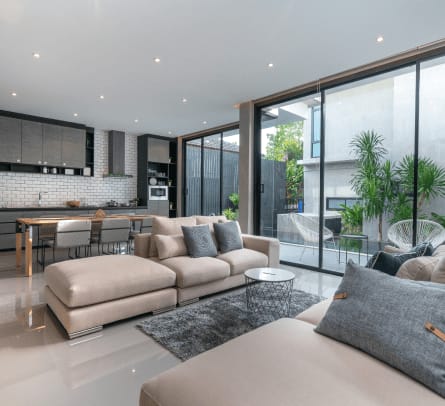
Cherry Hills Village has seen meaningful new construction activity over the past two decades, with custom builders and luxury developers introducing homes that reflect contemporary tastes and current building standards. These properties offer buyers something that legacy homes rarely can: a clean slate with no deferred maintenance, fully integrated technology, and layouts designed around how people actually live today.
Open-concept great rooms, primary suites with spa-caliber finishes, chef's kitchens with high-end appliance packages, and seamless indoor-outdoor living spaces are standard features in newer Cherry Hills Village construction. Energy efficiency is another meaningful differentiator. Newer homes built with modern insulation, windows, and HVAC systems carry substantially lower operating costs than older homes of comparable size.
From a market value standpoint, newer construction in Cherry Hills Village tends to command a premium per square foot relative to older homes in similar locations. However, the lot premiums that legacy homes often carry can offset this gap significantly. A newer home on a half-acre lot may ultimately sell for less than a legacy estate on two acres with equivalent interior finishes because land in Cherry Hills Village is a finite and deeply valued resource.
Renovated Homes and the Value Reset
One of the most interesting dynamics I observe in Cherry Hills Village is what I call the value reset that occurs when an older home undergoes a comprehensive renovation. A mid-century estate that has been fully reimagined with new systems, a redesigned floor plan, and luxury finishes effectively competes with new construction in the eyes of many buyers, while retaining the lot size, landscaping maturity, and neighborhood integration that legacy properties uniquely offer.
These renovated properties can represent exceptional value when the work has been done thoughtfully and with quality materials. They can also represent a significant risk when renovation work has been done to a lower standard, using cosmetic updates to mask underlying issues that a thorough inspection would eventually surface. I always encourage buyers considering renovated older homes to invest in a thorough inspection process and to ask detailed questions about the scope, permits, and contractors involved in the renovation.
What Sellers Should Understand About Age and Pricing Strategy
If you own an older home in Cherry Hills Village and are preparing to sell, understanding how buyers perceive age in this market is essential to positioning your property effectively. Buyers will discount for deferred maintenance, outdated systems, and layouts that feel disconnected from contemporary living.
The good news is that targeted, strategic updates can meaningfully close that gap without requiring a full renovation budget.
Refreshing kitchens and bathrooms, replacing aging roofs and HVAC systems, and investing in exterior presentation tend to yield strong returns in this market. Buyers in Cherry Hills Village are sophisticated and well-advised. They are not looking for the cheapest option. They are looking for the best value, and presenting your home in a condition that reflects pride of ownership goes a long way toward achieving the pricing outcome you are working toward.
Frequently Asked Questions
Does an older home always appraise for less than a newer one in Cherry Hills Village?
Not necessarily. Appraisers consider condition, location, lot size, and comparable sales rather than age alone. A well-maintained legacy home on a premium lot can appraise competitively with newer construction nearby.
How does home age affect negotiation leverage for buyers?
Older homes often present more opportunity for negotiation, particularly if deferred maintenance or system updates are needed. Buyers should use inspection findings as the foundation for any price adjustment conversation rather than age alone.
Are there specific eras of construction that tend to perform better in Cherry Hills Village?
Homes from the late 1980s through the mid-2000s can sometimes occupy an awkward middle ground, too old to compete with new construction on systems and finishes, yet without the architectural character of true legacy properties. These homes often benefit most from strategic renovation investment before going to market.
What is the best way to evaluate whether an older home is priced fairly?
Working with a local expert who understands the nuances of Cherry Hills Village pricing is the most reliable approach. Comparable sales analysis combined with a realistic assessment of condition and update needs provides the clearest picture.
Partner With a Local Expert Who Knows This Market
Whether you are drawn to the legacy charm of a mid-century Cherry Hills Village estate or the clean lines of a newly constructed luxury home, the decisions you make in this market deserve guidance grounded in genuine local knowledge and experience.
I work exclusively to help buyers and sellers in Cherry Hills Village and the surrounding Denver metro luxury corridor navigate these decisions with clarity and confidence. If you are ready to explore your options or want an honest assessment of how your home's age and condition position it in today's market, I would love to connect.
Visit Lisa Snyder Properties to learn more about how I can help you make your next move with confidence.